Streamlined Processing Solutions For Flexible Material Production
Flexible material production depends on accurate converting processes that transform wide rolls into practical formats for further manufacturing. A slitting machine plays an important role in this workflow by dividing large master rolls into narrower rolls with controlled widths. This process supports materials such as films, paper, foil, laminates, and other flexible substrates while preparing them for printing, packaging, coating, or additional converting stages.
Understanding The Role Of Slitting Equipment
For those exploring https://www.ketegroup.com/what-is-a-slitting-machine/, a slitting machine can be understood as equipment designed to unwind a wide material roll, divide it longitudinally, and rewind the resulting strips into individual rolls. Its coordinated operation helps manufacturers achieve consistent dimensions and organized output.
The basic production sequence includes:
- Unwinding the large parent roll
- Guiding the material through the processing section
- Positioning cutting tools for required widths
- Maintaining suitable web tension
- Rewinding the finished narrow rolls
This structured sequence creates an efficient path from large-format material to usable production rolls.
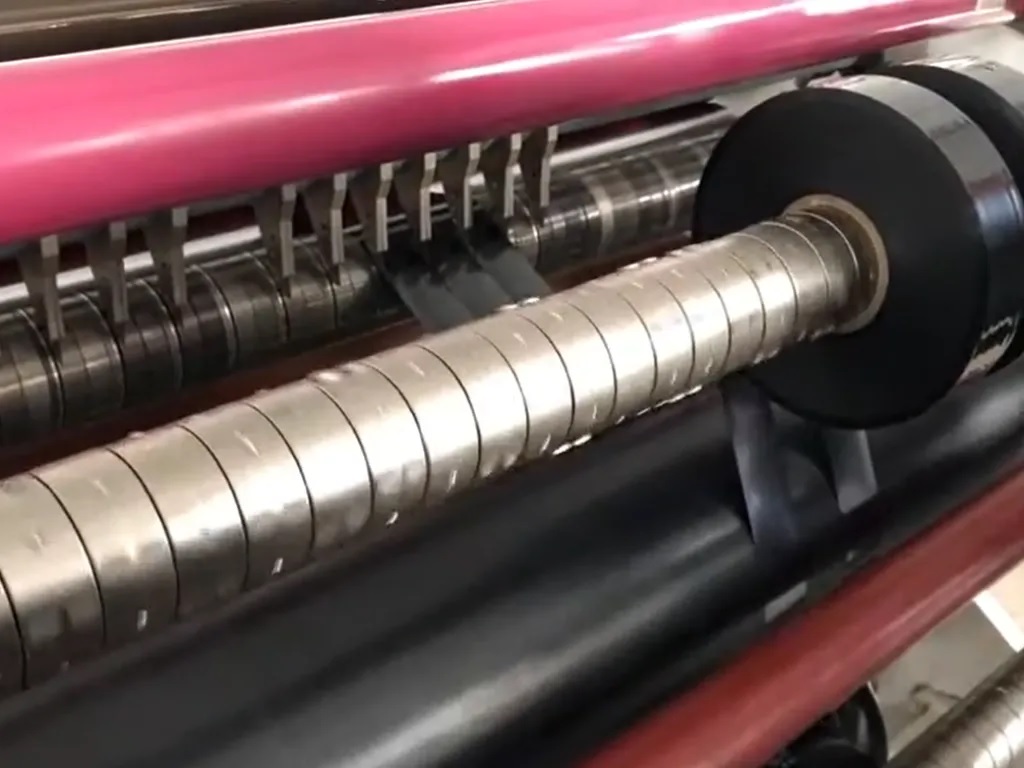
Precision Supports Consistent Material Handling
Accurate slitting depends on proper alignment, controlled tension, and suitable cutting methods. Razor, shear, and other cutting approaches can be selected according to the material and desired edge characteristics. Flexible films may require different settings from paper, foil, textiles, or multilayer structures, making process adjustment an important part of efficient production.
Consistent processing can provide several practical benefits:
- Uniform roll widths for downstream equipment
- Smooth material flow during converting
- Better control over finished roll dimensions
- Efficient preparation for different production requirements
- Improved organization of converted materials
Supporting Flexible Production Requirements
Modern manufacturing often handles different materials, widths, and order quantities. Slitting equipment provides useful flexibility because one wide roll can be converted into multiple narrower rolls according to production specifications. This makes it easier to prepare materials for different applications while maintaining a structured workflow.
Connecting Slitting With Downstream Operations
The value of slitting extends beyond the cutting stage. Properly prepared rolls can move efficiently into printing, laminating, coating, packaging, labeling, or other converting processes. Consistent widths and controlled rewinding help create material formats that are ready for the next manufacturing step.
Building An Efficient Production Workflow
A well-managed slitting process brings together material control, accurate cutting, stable tension, and organized rewinding. By converting wide flexible materials into precise and manageable rolls, slitting machines support streamlined production and adaptable manufacturing operations. Their role helps create a reliable connection between large-format material supply and the specific dimensions required by modern flexible material applications.